
FROM CACHOEIRA AND SÃO FRANCISCO DO CONDE (BAHIA) — The cultivation of macaúba palm in Bahia’s Recôncavo region (Brazil) by the energy company Acelen, for the production of renewable diesel and “green” aviation fuel, has been damaging nearby roads and limiting access to extractive areas previously used by surrounding quilombola communities, local residents say.
Through a consortium led by HSBC and the IFC (International Finance Corporation, the World Bank’s investment arm), Acelen—controlled by Mubadala Capital, a sovereign wealth fund from the United Arab Emirates—secured BRL 7 billion in public and private financing to build a biorefinery in the region where macaúba will be processed.
Ten other national and international financial institutions are participating in the partnership, including BNDES and Bradesco. The company states that it has already sold 90% of its future production to the United States and Europe.
However, the Brazilian Federal Public Prosecutor’s Office has opened two investigations to determine whether the process of prior consultation with communities potentially affected by the project is being carried out in accordance with ILO Convention 169 (International Labour Organization), a treaty ratified by Brazil that protects the rights of Indigenous and traditional communities.
Speaking to Repórter Brasil, which visited the region, quilombola residents complained about restrictions allegedly imposed by the company on access to places historically used for religious practices and food gathering. They also reported damage to local roads caused by the constant movement of trucks and tractors.
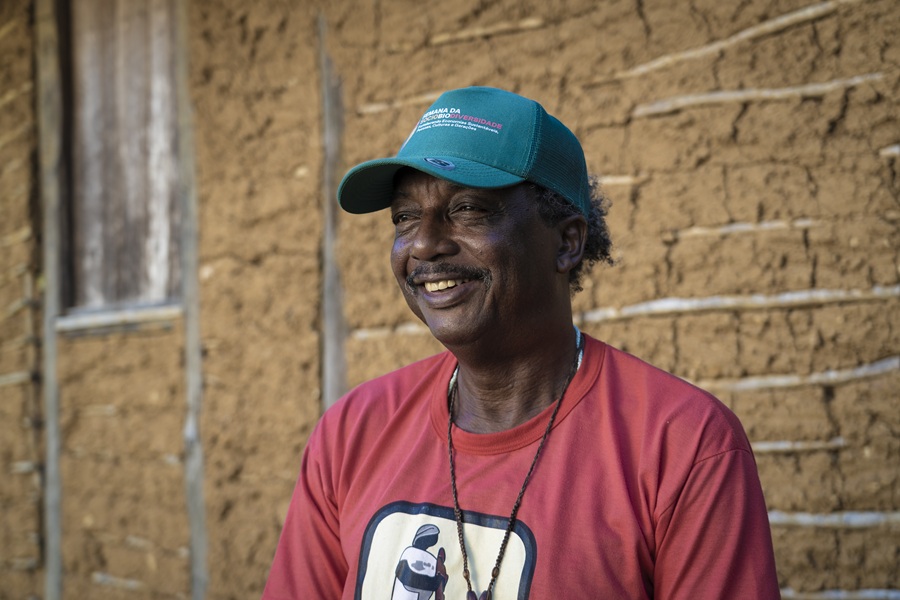
“We do not want to ask permission to enter what is ours,” says Ananias Viana, from the Kaonge quilombola community in Cachoeira (BA). He explains that residents used to collect fruit for subsistence and vines for handicrafts in areas that are now inaccessible. “If the company had talked to us beforehand, there would be no conflict.”
In the rural area of Cachoeira, at least 18 quilombola communities coexist with the arrival of the project, organizing their way of life around agriculture, extractivism, and fishing.
According to Acelen, macaúba is a highly energy-dense crop, seven to ten times more productive per planted hectare than soybeans when it comes to fuel production. The company entered Brazil in 2021 during the administration of Jair Bolsonaro, when it acquired the Mataripe Refinery in São Francisco do Conde (BA) from Petrobras.
Restricted access
According to the quilombola communities, roads previously used mainly by local residents began receiving heavy traffic from trucks and machinery such as tractors after macaúba cultivation started. They say the result has been damaged roads, numerous potholes, and sections that are difficult to access.
Around the plantations, fences and signs restricting entry can be seen in areas where, according to local residents, they previously circulated freely.
“Suddenly, a sign appears prohibiting entry into a space that has always been collective,” comments quilombola educator Cristina da Mata of UFBA (Federal University of Bahia).
“The impacts [of a project] on a quilombola territory can extend beyond residential areas. A quilombo includes extractive activities, livestock raising, religious practices, and access to environmental preservation areas,” explains anthropologist Ana Paula Comin de Carvalho, professor at UFRB (Federal University of the Recôncavo of Bahia).
Contacted by Repórter Brasil, Acelen stated that the signs installed “serve operational and safety purposes” and that it provides “communication channels for registering requests and incidents.” “The company recognizes the complexity of local territorial dynamics and maintains permanent channels for listening and dialogue to address perceptions, questions, and demands presented by communities,” it added. Read the full response here.
Brazilian Federal Prosecutor’s Office investigation examines whether the consultation process is being conducted properly
Acelen’s macaúba planting project was authorized in January 2025 by Inema (Bahia Institute for the Environment and Water Resources) through a Special Licensing Procedure, a simplified online mechanism partially based on the company’s self-declarations. The license, valid for eight years, does not permit deforestation or the use of water resources.
In January 2026, the Federal Public Prosecutor’s Office opened an investigation to determine whether the prior consultation process with quilombola communities potentially affected by the project was being properly conducted by Acelen.
The investigation was prompted by a complaint filed by the UFRB professor in June 2025. According to Carvalho, at the time the company had held only one meeting to present the project to the communities. The long distance between the meeting location and the quilombolas’ homes, combined with high transportation costs, allegedly resulted in low attendance.
Federal prosecutor Marcos André Carneiro Silva, who is leading the investigation, warns that the advance of a new economic cycle may intensify pressures on already vulnerable territories. “These are communities that often do not have formal title to their lands. When these areas acquire greater economic value, speculation and the risk of displacement increase,” he says. “These populations need to be protagonists in the process and properly consulted before any implementation,” Silva adds.
Speaking to Repórter Brasil, Acelen stated that it is developing the macaúba biofuels project with a focus on “responsible development, territorial dialogue, and the construction of long-term relationships with communities in the regions where it operates,” and that this approach has been part of the initiative’s strategy and implementation since its conception.
Acelen further stated that the environmental licensing processes for the agricultural areas were conducted in accordance with applicable legislation. The company’s full statement can be read here.
Vegetation clearing near the plantation
During its stay in the region in the last week of April, Repórter Brasil observed an apparently recently deforested area near the quilombola communities. Piles of timber were still stored on site.
The area corresponds to a Rural Environmental Registry (CAR) registered under the name Fazenda Campina, the same name as another farm located just a few meters away where Acelen cultivates macaúba. The company has authorization to plant in a complex known as Fazenda Campina (or Campinas, as it appears in some documents) and Fazenda Vale do Iguape.
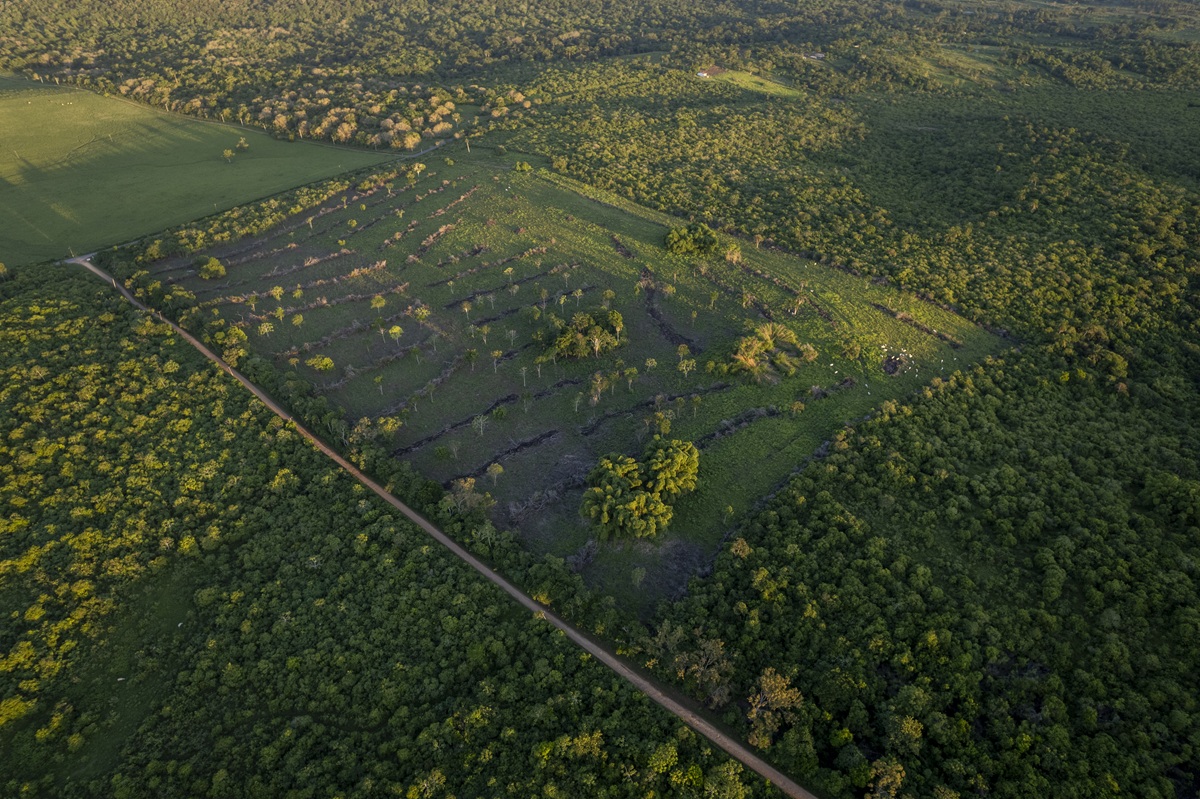
Contacted by Repórter Brasil, the company said it had not carried out vegetation clearing in the area mentioned and that the indicated polygon “is not part of the locations currently used by the company for agricultural implementation linked to the macaúba project.”
Acelen also stated that it has no information about the origin of the timber observed on site or about any activities conducted by third parties in the area.
“The company reiterates that its operations strictly follow all applicable environmental licensing, control, and monitoring processes, conducted in compliance with the competent authorities and best environmental management practices,” the company said in a statement.
Repórter Brasil asked Inema whether there was authorization for vegetation clearing in the area, but the environmental agency had not responded by the time of publication.
ICMBio (Chico Mendes Institute for Biodiversity Conservation), which manages a conservation unit in the region, the Baía do Iguape Extractive Reserve (Resex), stated that, as of the publication date of this report, it had no conclusive information regarding the existence of authorization for vegetation clearing in the area in question.
“Due to a series of complaints [about the deforested area] registered within the conservation unit, the property mentioned is among the areas that will be analyzed through monitoring and enforcement activities,” ICMBio said in a statement sent to Repórter Brasil.
The agency expressed an additional concern about a possible connection between the deforestation and attempts to make the area more attractive for agriculture: “It is necessary to consider the possibility of indirect land speculation and land leasing processes aimed at the future expansion of macaúba cultivation. This type of dynamic has already been observed in other monoculture contexts in Bahia’s Recôncavo region,” the statement says. “This information will be sought within the scope of the Extractive Reserve administration’s monitoring and enforcement activities.”
Biorefinery next to a plant with a history of spills
In addition to macaúba cultivation in Cachoeira, Acelen’s project includes the construction of a biorefinery in São Francisco do Conde, on the shores of Todos os Santos Bay, also in Bahia’s Recôncavo region, to process oil extracted from the palm and produce biofuel.
According to Acelen, at least nine fishing and shellfish-harvesting communities live near the planned plant site. To build the new facility, 36.43 hectares of Atlantic Forest vegetation will be cleared, according to the company.
Acelen already operates an oil refinery in Todos os Santos Bay that has a history of spills and legal actions seeking remediation for environmental damage.
Researchers from UFBA (Federal University of Bahia), UFRB, and local residents told Repórter Brasil that oil spills have reduced fish and shellfish populations in the bay—resources that form the basis of subsistence for many families.
Residents living near the future plant also complain about the jobs offered by Acelen for the project. According to them, positions such as chemical engineer do not match the profile of local communities, where fishing and service occupations, such as electricians, predominate.
“I don’t think these jobs are for us,” says Uilma Almeida da Cruz, a shellfish harvester from Ilha das Fontes. According to her, the more qualified positions do not align with local realities.
The Federal Public Prosecutor’s Office expanded its investigation and is also analyzing the possible socio-environmental impacts of the biorefinery on traditional communities in São Francisco do Conde. In May, the agency issued a recommendation to Inema requesting that the Bahia state agency map traditional communities in the region to ensure an adequate prior consultation process.
Asked about the issue, Acelen Renováveis said that the São Francisco do Conde biorefinery project has been “conducted through dialogue with potentially impacted communities, including fishers, shellfish harvesters, and local leaders.” The company also stated that the “process involves Free, Prior, and Informed Consultation (FPIC), as well as initiatives aimed at productive inclusion, professional training, and territorial development.”
Regarding the history of oil spills, Acelen stated that it is carrying out a broad modernization process at the industrial facility and maintains continuous environmental monitoring programs in the region. “The actions developed by the company include preventive initiatives, environmental assessments, and measures aimed at the progressive restoration of sensitive surrounding areas,” the statement says. The full response can be read here.

25 anos investigando para mudar.
A Repórter Brasil já ajudou a impulsionar leis, fortalecer direitos e combater o trabalho escravo.
Em 2026, fazemos 25 anos — e vem muito mais por aí!
Leia também
The post Quilombola Communities in Brazil report losing access to land due to ‘green’ aviation fuel production appeared first on Repórter Brasil.


